Service
Custom Orthotics
Scanned, prescribed, and only when the exam says you need them.
- Visit length
- 20 minutes for scanning and gait analysis
- Typical course
- One fitting, then a two-week check
- Discomfort
- None. A two-week break-in period is normal.
- Insurance
- Sometimes. Frequently HSA and FSA eligible.
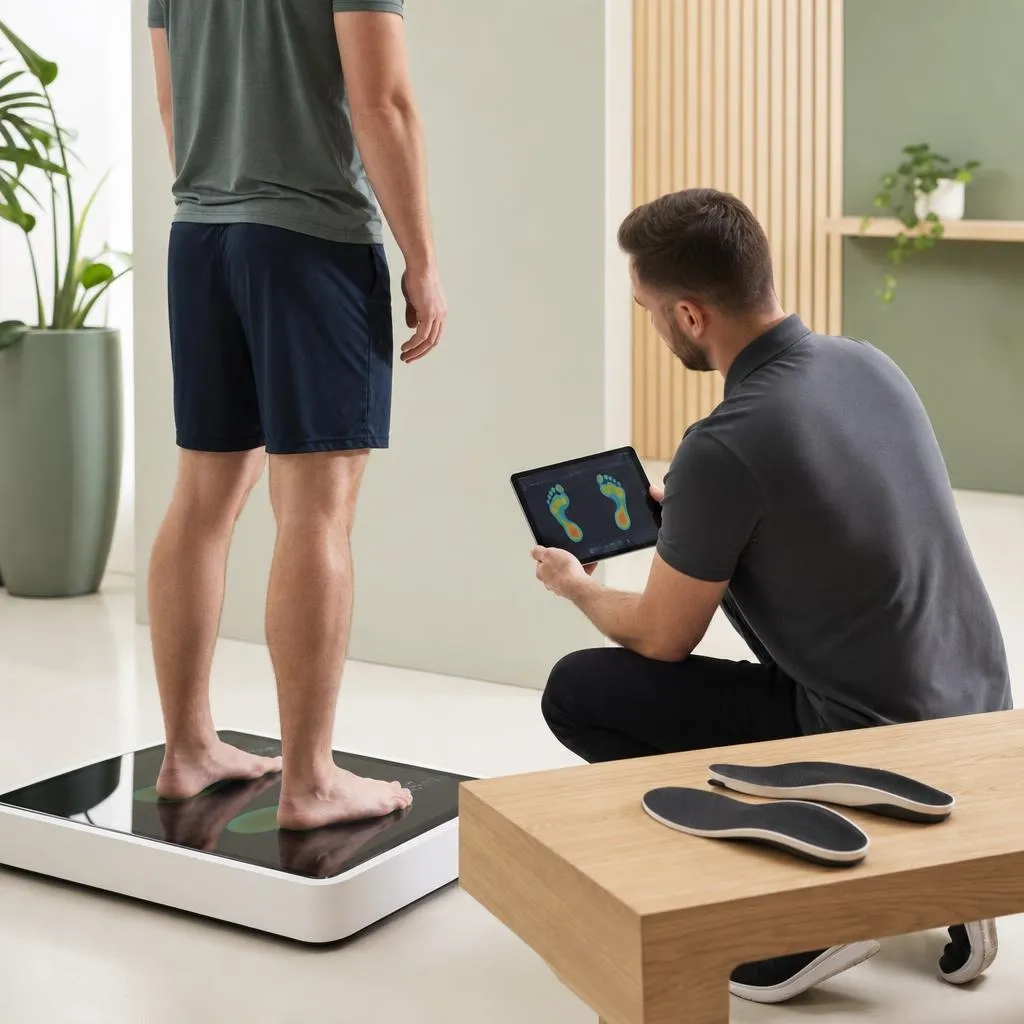
Digitally scanned custom foot orthotics for patients whose foot mechanics are genuinely contributing — with a frank conversation about when an over-the-counter insert would do the same job for a fifth of the price.
Your foot contacts the ground somewhere around eight thousand times a day. When that contact goes wrong in a consistent way, the consequences travel upward — the knee absorbs rotation it should not, the hip compensates, and the low back gets involved last.
Orthotics are one legitimate tool for changing that. They are also one of the most oversold products in musculoskeletal care, so let us be specific about when they earn their price.
When custom orthotics are genuinely worth it
- Confirmed structural leg-length discrepancy where a heel lift needs precise specification.
- Diabetic feet where pressure redistribution is a tissue-protection question, not a comfort one.
- Significant rigid deformity that no shelf product accommodates.
- Plantar fasciitis that has failed a proper trial of loading, footwear change, and prefabricated support.
- Recurring mechanically-driven injury in a runner where gait analysis shows a clear, correctable pattern.
When they probably are not
If your feet do not hurt, your knees do not hurt, and someone at a booth told you your arches look low — you likely do not need anything. Flat feet that function well and are not causing symptoms are a variation, not a diagnosis.
If you have not yet tried an $50 over-the-counter insert for a straightforward case of plantar fasciitis, start there. We will tell you which one to buy and see you in six weeks.
What the scan captures
A digital pressure plate records how force distributes across your foot through the stance phase — where pressure peaks, how long you spend on the medial side, whether push-off happens through the right structures. That map, plus the gait video and the clinical exam, determines the prescription.
The scan is the easy part. The judgement about whether you need the device at all is the part worth paying for.
How it runs
Watch you walk first
Gait analysis before any scanning. Static foot posture predicts dynamic behaviour poorly — plenty of flat-looking feet function perfectly well and never need a thing.
Decide whether you need custom at all
This is the conversation most clinics skip. For a lot of patients a good over-the-counter insert performs comparably. We will tell you when that is the case, and it is more often than you might expect.
Scan and prescribe
A digital pressure-plate scan captures the pressure map. The prescription specifies posting, arch height, and material based on your findings and what you actually do all day.
Fit and follow up
A two-week check to adjust for hot spots or discomfort. Orthotics that never get followed up are the ones that end up in a drawer.
Conditions we use this for

Plantar fasciitis
The first steps out of bed tell us almost everything.

Knee pain
A hinge caught between two ball joints, absorbing everyone else's mistakes.

Hip pain
Where it hurts tells us most of what we need to know.

Low back pain
The most common reason people find us, and the most commonly mistreated.
Custom orthotics
What people ask about this.
Do I really need custom, or will drugstore inserts work?
Honestly, for a substantial number of people a quality over-the-counter insert works about as well. The research comparing custom to prefabricated orthotics for common conditions like plantar fasciitis shows smaller differences than the price gap implies. Custom makes a real difference for significant structural asymmetry, diabetic pressure offloading, confirmed leg-length discrepancy, and feet that have failed a reasonable trial of prefabricated support. We would rather send you to buy a $50 insert than sell you a $400 pair you did not need.
Are orthotics a permanent crutch?
They are a support, and the concern about weakening the foot is more theoretical than demonstrated. That said, we pair them with intrinsic foot strengthening as a matter of course. The goal is a foot that functions better, with the orthotic reducing load while that happens.
How long do they last?
Typically two to three years with daily wear, less for runners putting serious mileage on them. The shell outlives the top cover, which can be replaced separately at lower cost.
Will they fit my shoes?
Depends on the shoe. Dress shoes and low-volume footwear need a slimmer build, which we can specify. Tell us what you actually wear before we order, not after.
New patient special — $59 New Patient Visit
Not sure custom orthotics is what you need?
That is exactly what the first visit determines. If the exam points somewhere else, we will tell you — and if it points outside this clinic, we will refer you.
Columbus, OH · Same-week appointments · Most insurance accepted