Service
Sports Chiropractic + Performance
Built for people whose plan is to keep training.
- Visit length
- 30–45 minutes
- Typical course
- Varies. In-season management can be ongoing.
- Discomfort
- Depends on the tissue. We work around competition dates.
- Insurance
- Yes, for injury care. Performance work is out of pocket.
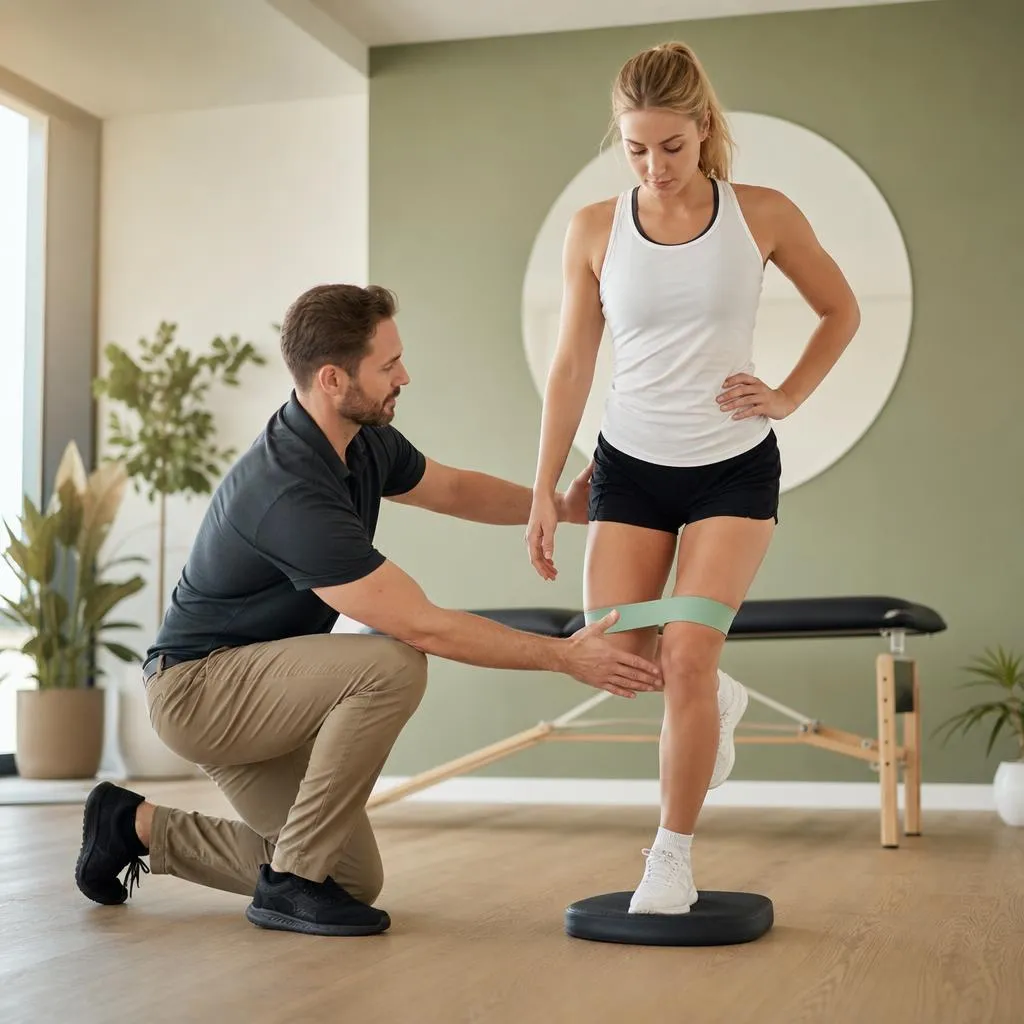
Injury management and performance work for athletes and active adults — with the working assumption that "just rest for six weeks" is not an acceptable answer.
Athletes are a genuinely different clinical population, and not because their tissue is different. It is because their tolerance for inactivity is near zero and their season has dates on it.
A plan that assumes six weeks of rest is a plan an athlete will abandon in week two and then not tell you about. So we build plans people will actually follow.
The chain, not the spot
Sports injuries are rarely where they hurt. Some patterns show up so often they are almost diagnostic:
- Lateral knee pain in a runner — usually a hip abduction control problem, not a knee problem.
- Low back pain under a barbell — frequently a hip mobility restriction the lumbar spine is compensating for.
- Shoulder impingement in an overhead athlete — commonly a thoracic rotation and scapular control issue.
- Recurrent hamstring strain — often about eccentric strength and running mechanics, not flexibility.
Treating the painful structure in any of these gets you two good weeks and then the same phone call.
In-season versus off-season
These are different jobs. In-season, the goal is to keep you competing while doing no harm — symptom management, load modification, and timing treatments so you are not sore on game day. Off-season is when we fix the underlying capacity problem, because that work makes you temporarily worse before it makes you better.
Tell us where you are in your calendar at the first visit. It changes everything about what we recommend.
Return to play
We use objective criteria: strength symmetry within 10 percent, hop and jump testing where relevant, and the ability to perform your sport’s demands without visible compensation. Clearing an athlete on the basis of pain alone is how re-injury rates stay as high as they are.
How it runs
Screen the whole chain
A painful knee gets its hip, ankle, and opposite side screened too. Local pain is frequently the last link to fail rather than the first thing that went wrong.
Watch you do the thing
We will have you squat, hinge, run, throw, or swing. Symptoms that only show up under your sport's specific demands do not show up on a treatment table.
Treat and reload same-day
Manual work, needling, or instrument-assisted soft tissue, followed immediately by loading the pattern we just changed. The nervous system holds what it uses.
Test before clearing
Return-to-play means passing objective criteria — strength symmetry, hop testing, sport-specific movement without compensation. Not "it feels okay now."
Conditions we use this for

Knee pain
A hinge caught between two ball joints, absorbing everyone else's mistakes.

Hip pain
Where it hurts tells us most of what we need to know.

Shoulder pain
The shoulder is usually the victim, not the culprit.

Low back pain
The most common reason people find us, and the most commonly mistreated.

Plantar fasciitis
The first steps out of bed tell us almost everything.
Sports performance
What people ask about this.
Do I have to stop training?
Almost never completely. Total rest deconditions everything that was not injured and, for most soft tissue problems, is not even optimal for the injured part. We modify — change the load, the range, the tempo, or the exercise — and keep you moving. Complete rest is reserved for the small number of situations that genuinely require it, like a suspected fracture.
Can you help performance if nothing hurts?
Yes, and it is often the better time to come in. Screening for asymmetries and restrictions before they become symptoms is straightforward work. Restriction through one hip or one thoracic rotation direction shows up in golfers and throwers long before it produces pain.
How fast can I get back?
It depends entirely on the tissue. Muscle strains heal faster than tendons, tendons faster than bone. What we will do is give you a realistic range at the first visit and test against criteria rather than guessing. Anyone who promises you a specific date before examining you is making it up.
Do you work with my coach or trainer?
Gladly, with your permission. Care that contradicts your training program helps nobody. A ten-minute conversation with a coach usually saves weeks.
New patient special — $59 New Patient Visit
Not sure sports performance is what you need?
That is exactly what the first visit determines. If the exam points somewhere else, we will tell you — and if it points outside this clinic, we will refer you.
Columbus, OH · Same-week appointments · Most insurance accepted