Service
Prenatal + Pediatric Care
Gentle, appropriately scoped, and clear about what it is for.
- Visit length
- 20–30 minutes
- Typical course
- Prenatal, often through the third trimester
- Discomfort
- Very low force. Pregnancy pillows and side-lying positioning.
- Insurance
- Often, for a musculoskeletal diagnosis
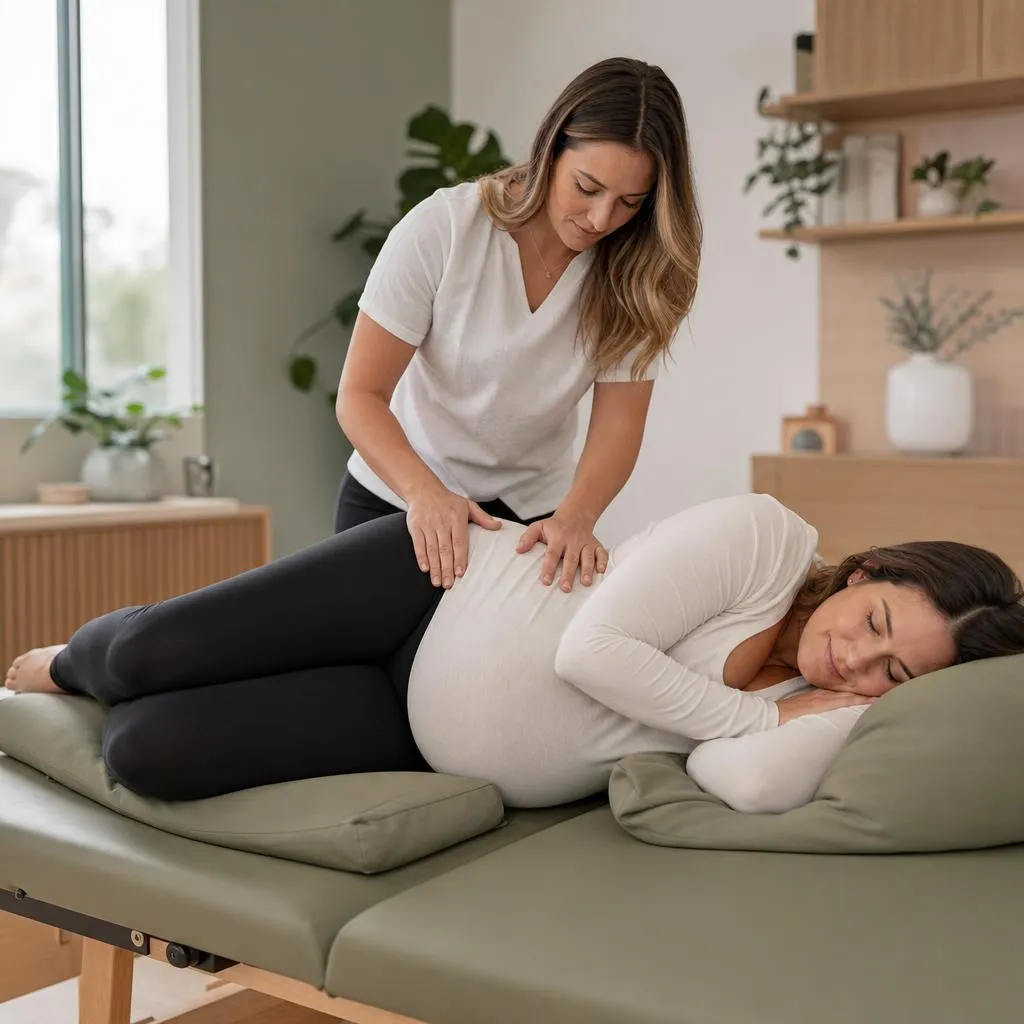
Webster-certified prenatal care for pregnancy-related musculoskeletal pain, and conservative pediatric care with an honest scope — musculoskeletal complaints, not general health claims.
Two populations, one shared principle: use the least force that produces the result, and be specific about what the care is for.
Pregnancy
Pregnancy loads the pelvis in a way nothing else does. Relaxin increases ligamentous laxity across every joint. Your centre of mass shifts forward and keeps shifting. The lumbar curve deepens, the pelvis tilts, and the SI joints and pubic symphysis take loads they are not accustomed to.
Somewhere between half and two thirds of pregnancies involve significant back or pelvic pain, and it is routinely dismissed as something to endure. It is usually mechanical and it usually responds well to conservative care.
Practical things that matter: we have pregnancy pillows, you are never face-down on your bump, and after the first trimester you are never flat on your back for any length of time. Late-pregnancy visits are side-lying, and that works fine.
Children
Here is where we want to be unusually direct, because this part of the profession has a credibility problem.
What we treat in children: injuries and mechanical musculoskeletal complaints. A fall from a bike. Sport injuries. Adolescent back pain. A wrist that has hurt since gymnastics. Postural pain in a growing teenager. These are ordinary, treatable, and squarely within scope.
What we do not treat in children: ear infections, colic, reflux, asthma, bedwetting, ADHD, immune function, or “wellness.” You will find chiropractors who advertise all of these. The evidence does not support it, and a child with a persistent ear infection needs a pediatrician, not us.
If you bring us a child with a problem outside our scope, we will say so and help you find the right person. That is not us being modest. It is the whole basis for trusting the things we do say we can help with.
How it runs
Position for the body in front of us
Pregnancy pillows and side-lying setups mean you are never face-down on a bump or flat on your back late in pregnancy. Comfort during the visit is a real clinical concern, not a nicety.
Use the lightest effective force
Prenatal and pediatric care uses drop-table, instrument-assisted, and sustained gentle contacts. For an infant, the force is comparable to what you would use to test a ripe tomato. There is no forceful twisting.
Webster technique where indicated
A specific sacral and pelvic ligament technique used to reduce pelvic and SI dysfunction in pregnancy. See the FAQ below for what it is and is not.
Refer without ego
We work alongside your OB, midwife, and pediatrician. Anything outside a musculoskeletal scope goes to them, promptly.


Prenatal + pediatric
What people ask about this.
Is chiropractic safe during pregnancy?
For pregnancy-related musculoskeletal pain, the safety record of gentle chiropractic care is good and adverse events are rare. Techniques and positioning are modified throughout. We do not treat during pregnancy without knowing your obstetric history, and there are situations — placenta previa, preeclampsia, vaginal bleeding, ectopic pregnancy — where we will decline and send you straight back to your OB.
What is the Webster technique, exactly?
A specific analysis and adjustment of the sacrum and surrounding pelvic ligaments, developed to address SI joint dysfunction in pregnancy. It is frequently described online as "turning a breech baby." That is not what it does and not what the evidence supports. It addresses pelvic biomechanics; any effect on fetal position is unproven. We describe it as what it is — a treatment for pelvic pain and dysfunction.
Why would a child need to see a chiropractor?
For the same musculoskeletal reasons an adult would — a fall, a sports injury, neck or back pain, a limp with a mechanical cause. That is the scope. We do not treat children for ear infections, colic, asthma, ADHD, immune function, or general wellness, because the evidence does not support chiropractic care for those conditions and your pediatrician is the right provider for them.
Is adjusting an infant safe?
The forces used are extremely light — sustained fingertip pressure, not manipulation as an adult would experience it. Serious adverse events in the literature are very rare. The more important question, in our view, is whether the child needs the care at all, and for most of the conditions parents are told chiropractic can help with, the answer is no.
Do you require a course of visits for kids?
No. Most pediatric musculoskeletal complaints resolve in a handful of visits. If a child needs ongoing care, something else is going on and it needs a different provider.
New patient special — $59 New Patient Visit
Not sure prenatal + pediatric is what you need?
That is exactly what the first visit determines. If the exam points somewhere else, we will tell you — and if it points outside this clinic, we will refer you.
Columbus, OH · Same-week appointments · Most insurance accepted